
Inhalt
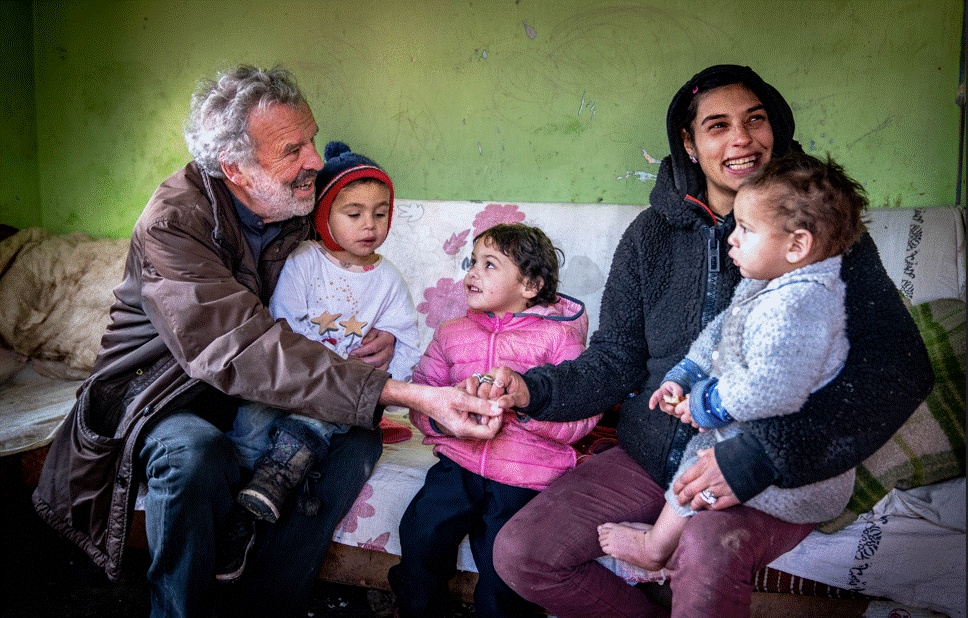
In 2012, Ruth Zenkert and Father Georg Sporschill SJ founded the ELIJAH association to support neglected Roma children and their families in Transylvania, Romania. The Roma receive direct and sustainable help to improve their living conditions and escape the deep poverty they have been trapped in for generations.
The association takes its name from the prophet Elijah, who stood up for the poorest and fought against injustice.
Since its inception in the village of Nou, 30 kilometres east of Sibiu, the project has grown steadily. Today, ELIJAH is active in six locations and operates four social centres, two music schools, a student dormitory, a women’s shelter and a day centre for the homeless with emergency sleeping facilities, and there are over 160 family homes that have been built or renovated.
Our Mission
The prophet Elijah fought against injustice. During famine, against abuse and wherever children’s lives were threatened. The unjust queen persecuted him. He fled. When Elijah was starving, the ravens brought him ‘bread and meat in the morning and bread and meat in the evening,’ according to the Bible.
Ravens are the worst insult for Roma people in Romania. But ravens are loyal, social, capable of learning and clever. Just like our little friends. When families have food to eat and children are allowed to learn, they will stand up for others. Like Elijah’s ravens on divine mission.
Like a Family
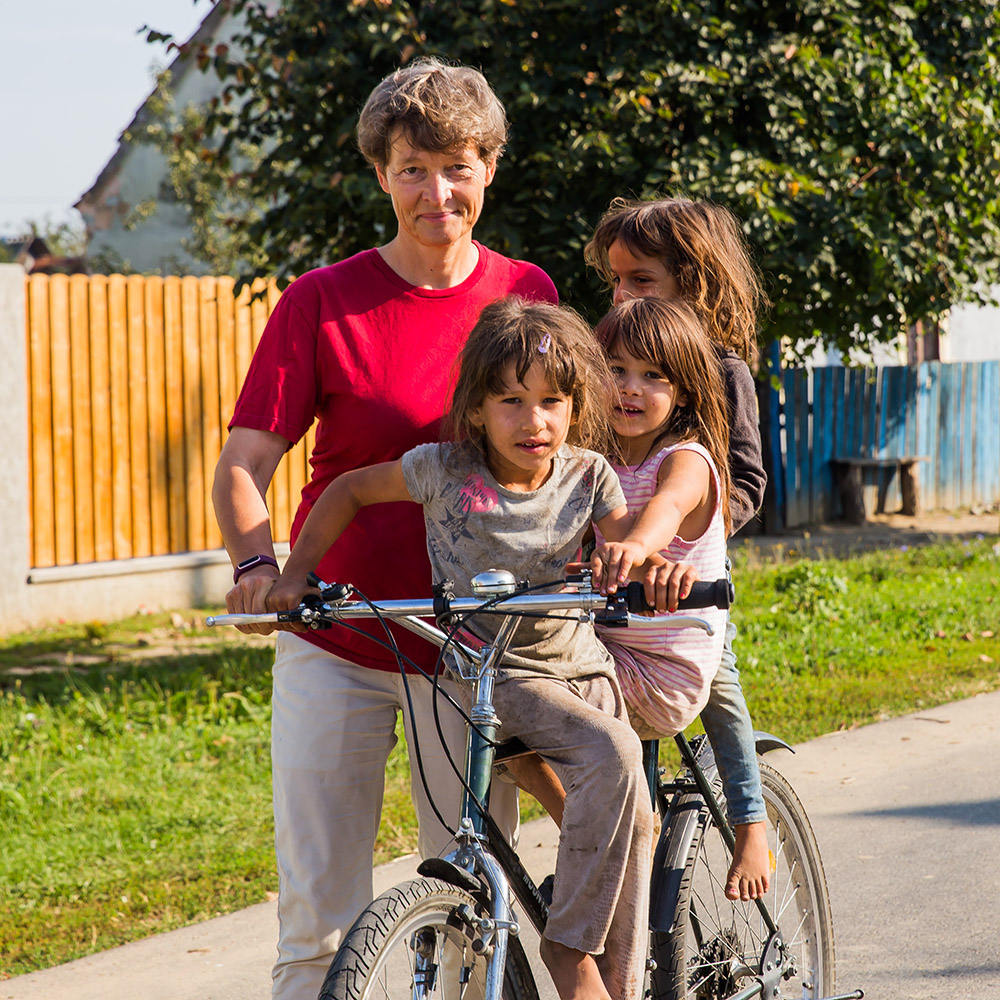
Le Chaim – To life! – is both the name and the motto of the community house in Marpod. In the former Sachsenhof, the fire burns brightly for ELIJAH. This is where the founders, Father Georg Sporschill SJ and Ruth Zenkert, live with their staff and volunteers. In the ELIJAH community, everyone has a task.
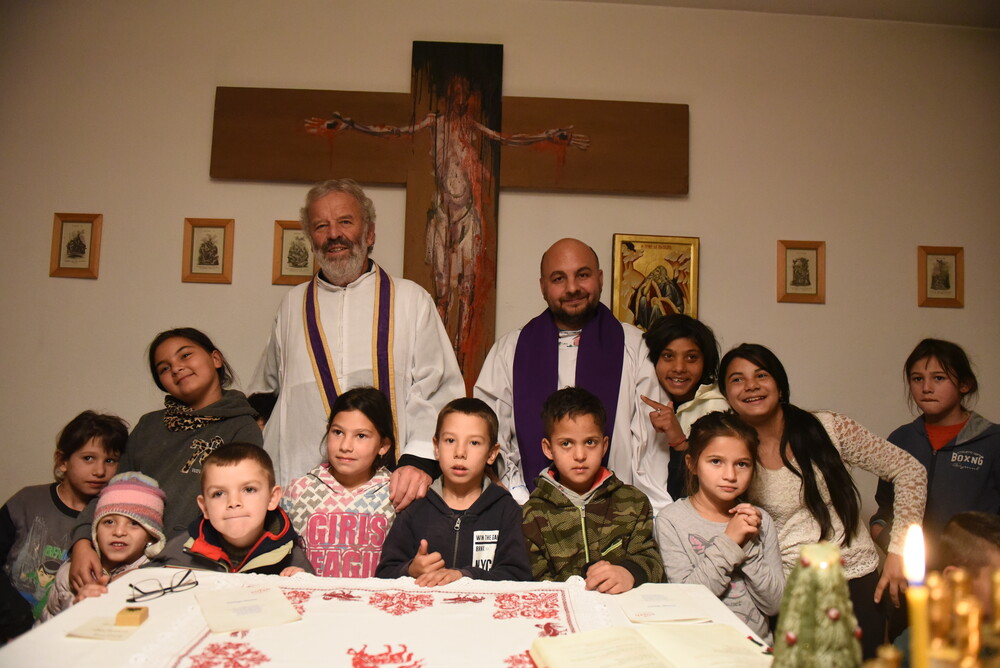
We start the day with morning prayers, which are prepared and led by the volunteers. After breakfast, we go to work – in the social centre, the workshop, the kitchen, the music school and the office. The children go to school. In the evening, we celebrate Holy Mass with Fr Georg, often joined by children, friends and staff. Our guests and benefactors are accommodated in the Le Chaim community and take part in our life and work.
Spirituality
Religious life at ELIJAH is part of our daily routine. Every fortnight, more than 30 ELIJAH employees come to Bible school. We read the Bible and try to find questions about life and social work, discover new horizons and let God guide us.
We live ecumenism. One example is the friendship between Father Călin, the Orthodox priest in Hosman, and Father Georg. Father Călin is often our guest, we exchange ideas and eat together.
Child Protection
ELIJAH employees are confronted with authoritarian, patriarchal family structures in Roma culture. Added to this are poverty and low levels of education. As a result, women and children are given little respect and are often exposed to violence and abuse.
ELIJAH offers children and young people safe spaces. The child protection team empowers young people and helps them to defend themselves against violence and abuse, but also to stand up for others. Regular supervision within the ELIJAH team and workshops with external experts are organised to raise awareness among staff and parents.
ELIJAH’s framework for action is based not only on Romanian national child and youth protection laws, but also on international human rights agreements, in particular the UN Convention on the Rights of the Child and the Hague Convention on Child Protection. In addition, we have developed our own ELIJAH child protection policy, which was co-developed by the ECPAT Austria Working Group based on the international child protection standards of Keeping Children Safe (www.keeQingchildrensafe.org.uk).
Barbara Zenkert B.A., a German psychologist, is responsible for developing the ELIJAH Child Protection Policy and implementing the project throughout the organisation. She has many years of experience working with traumatised patients and supports ELIJAH employees by offering advice through workshops and training sessions.
“Child protection become a global focus for institutions working with young people. From the very beginning, ELIJAH has developed a culture of protection and safety for children and formulated guidelines to which the association, all its employees, volunteers and visitors are committed. ELIJAH wants to offer children and young people safe spaces and create conditions that are as free as possible from psychological, physical and emotional violence. Our stance is reflected in the Child Protection Policy, which includes the assessment of risky situations, the involvement and communication of those in our care, the emergency plan and further training.